
I have been staring at a chart for two weeks and I cannot stop thinking about it.
Datassential tracks every restaurant opening and closing in Canada on a monthly basis. Their March 2026 Restaurant Landscape report covers 102,323 active units. Most people look at this data and see the closures. I looked at it and saw something else entirely.
Independent restaurants, which make up 60.2% of all active units in this country, grew every single month from January through August 2025.
January: +167. February: +148. March: +158. April: +125. May: +134. June: +182. July: +103. August: +124.
Eight straight months. Positive net growth. Restaurants opening faster than they were closing.
Then September hit.
September: -69. October: -114. November: -100. December: -64.
Four months wiped out everything the previous eight had built. A total of 347 net unit losses from September through December.
That is not a bad quarter. That is the entire business model of independent restaurants in Canada laid bare in 12 data points. You grow in the warm months. You bleed in the cold ones. And whether you survive depends entirely on how much you banked during the growth window.
That is what this article is about.

Introducing the Summer Bank Account
Most operators think about summer as a good season. Patios open. Tourism picks up. Sales go up. But they treat those months the same way they treat every other month: spend what comes in, hope for the best.
The Datassential data tells us that hope is not a strategy.
Think of May through August as your deposit window. Every dollar of profit you generate during these months is a deposit into a reserve account that has to fund your business through the withdrawal window of September through February. If your summer deposits are smaller than your winter withdrawals, you are on the closure list.
The math that matters: If your restaurant does $40,000 per month in summer revenue at a 10% net margin, you are banking $4,000 per month. Over four peak months, that is $16,000. If your fall and winter losses average $3,000 per month across six cold months, you need $18,000 just to stay alive. You are short $2,000 before you even factor in unexpected costs.
Now imagine you increase summer revenue by 15% through the strategies below. That is $46,000 per month, banking $4,600, totaling $18,400. That covers your winter gap. That is the difference between staying open and joining the 4,000.
Forget Savings vs. Foot Traffic. Think Margin Per Guest.
The traditional debate is a false choice. Should you cut costs or chase traffic? The answer has always been both. But that does not tell you what to do Monday morning.
Here is a better framework. Think about one number: margin per guest. Every person who walks through your door generates a certain amount of profit after food cost, labour and overhead. Your job this summer is to increase that number.
Reduce what it costs to serve each guest. Tighter portion control. Smarter scheduling. Less waste. A menu engineered around your highest-margin items. Run a one-week waste audit. Most operators lose 2% to 4% of food cost to waste they never measure. That is the fastest margin improvement available.
Increase what each guest spends. Not through price hikes. 88% of Canadians say price is a top factor when choosing where to eat. Instead, use menu architecture. Lead with shareable plates. Build combo offers that pair a high-margin appetizer with an entree. Train your staff to suggest a specific drink rather than asking if they want one. Introduce a zero-proof cocktail menu. Alcohol sales are declining 10.6% year over year, but premium non-alcoholic beverages carry the same margins.
Make each guest worth more over time. A guest who visits once is worth $63. A guest who visits monthly for six months is worth $378. A guest who books you for corporate catering is worth $420 per order and 80% of corporate clients order at least once a month. The cheapest customer to acquire is the one you already have. The most valuable is the one who pays with a company credit card.
Seven Summer Plays Nobody Is Making
You have read the standard patio advice a hundred times. Lights, plants, music, seasonal menu. That is table stakes. Here are seven plays most operators are not running.
1. Sell the Daypart Nobody Wants
McKinsey's 2026 data identified late-night dining as the fastest-growing daypart, up more than 10% annually since 2021. Meanwhile, breakfast growth has stalled.
Most Canadian independents close by 9 or 10 PM. The kitchen sits dark. The rent keeps running. Test a late-night window from 10 PM to midnight on Thursdays through Saturdays this summer. Strip the menu to five high-margin items: loaded fries, a smash burger, a dessert, two signature cocktails or mocktails. Promote it exclusively on Instagram and TikTok. Late-night is where Gen Z and Millennials spend, and they discover restaurants on social, not Google.
You are not adding a new business. You are monetizing an asset you already pay for.
2. Build a Summer Subscription
Create a Summer Locals Pass. For $99 or $149 for the season (June through August), members get one free appetizer per visit, priority patio seating and 10% off every bill. Cap it at 100 members. That is $9,900 to $14,900 in cash collected before summer even starts.
Those members visit more frequently because they feel invested. They bring friends who pay full price. And you have their email and phone number for direct marketing all year.
The economics work because the appetizer cost is $2 to $4, the discount is offset by increased visit frequency and the upfront cash flow is pure operating capital.

3. Turn Your Kitchen Into a Catering Factory Before Noon
The Canadian catering market is worth $3.3 billion and growing at 7.2% annually. Corporate events account for 60% of demand. The average workplace catering order is $420. And most operators are doing exactly nothing to capture it.
Your kitchen is already staffed for prep in the morning. Shift two hours toward catering production. Build three tiered packages: $15 per person working lunch, $25 premium spread, $40 executive package. Print a one-page catering sheet. Walk it into 20 offices within 10 km. One client ordering twice a month at $500 is $1,000 per month in recurring, prepaid revenue.
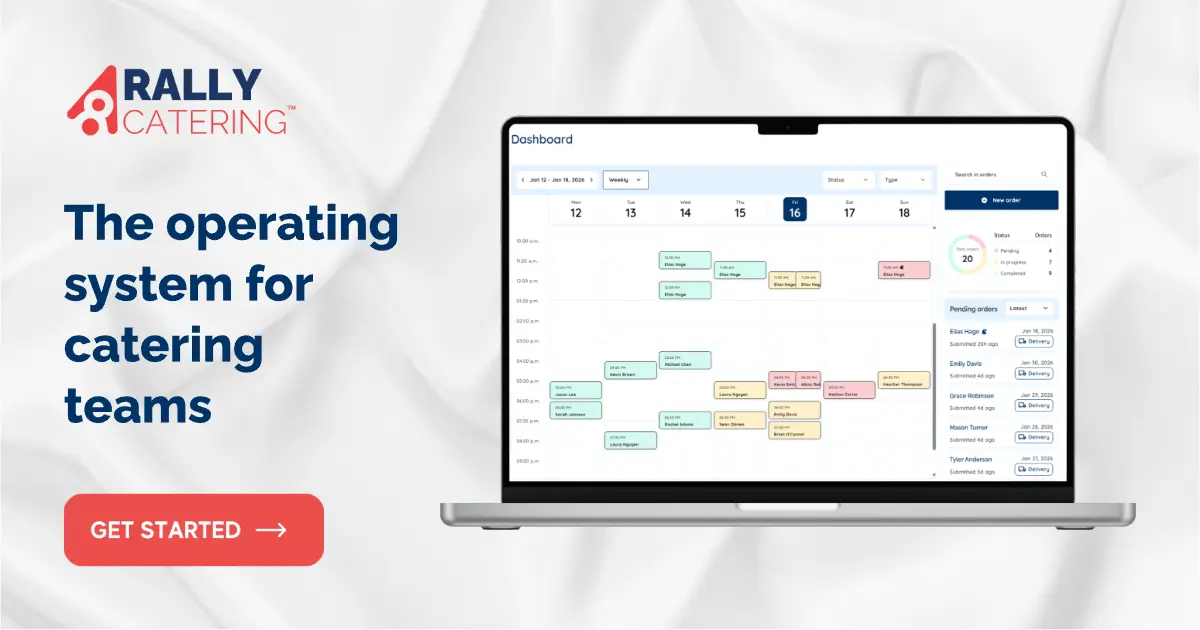
Services like Rally Catering are making this even easier by connecting independent operators with corporate buyers actively looking for local catering options.
4. Run a FIFA Pop-Up (Even If You Are Not in a Host City)
The FIFA World Cup hits Canada in June and July 2026, with Toronto and Vancouver hosting matches. But every city in Canada will have fans watching. This is a once-in-a-generation traffic event.
Build a watch party calendar. Get screens. Create match-day menus themed around the countries playing. Offer group booking packages for offices. This is foot traffic, catering, group bookings and social media content rolled into one event that runs for a month.
The operators who plan for FIFA now will fill their calendars. The ones who wait will wonder why the bar down the street is packed.
5. Weaponize Your Google Business Profile for AI Search
AI tools like ChatGPT, Google Gemini and Perplexity are recommending restaurants based on structured data from Google Business Profiles and websites. When someone asks AI for the best patio restaurant or the best caterer for a corporate event, the AI pulls from GBP data, reviews and website content.
If your GBP does not list catering as a service, does not have recent patio photos and does not have reviews mentioning specific experiences, you are invisible to a growing segment of high-intent buyers. This is Generative Engine Optimization (GEO).
Update your GBP this week. Add catering as a service. Post three photos. Respond to every review. Build an FAQ page on your website answering questions like "best patio restaurant near me" in natural language. That is how you get cited by AI.
6. Create an Off-Peak Daypart Product
Tuesday and Wednesday afternoons are dead in most restaurants. Instead of cutting staff and accepting the loss, create a product for those hours.
What does your neighbourhood need between 2 PM and 5 PM? Remote workers need Wi-Fi and good coffee. Parents need a quick snack stop. Seniors want an affordable early dinner. Build an afternoon menu at $8 to $12 per person that gets bodies in the door when your fixed costs are running anyway.
Or run a 3 PM cooking class one day a week. Charge $45 per person. Cap at 12 people. That is $540 in revenue during a daypart that would otherwise generate zero. Plus every attendee becomes a future dine-in customer.
7. Pre-Sell Fall to Fund Summer
The Datassential data shows independents bleed from September through December. Do not wait until September to figure out how to survive it.
During peak summer months, pre-sell fall experiences. Offer early-bird holiday party packages in July. Sell gift cards at a premium (buy $100, get $120 in value, redeemable October through January). Launch a fall supper club series with tickets on sale in August. Book your October wine dinner in June.
Every fall dollar you collect during summer is a withdrawal you will not have to make from your reserve later. You are smoothing your revenue curve before the curve tries to break you.
Time for the lotion
Summer is not a season. It is a funding round. The Datassential data makes this brutally clear. Canadian independent restaurants have one season where they reliably grow. That season starts now.
The operators who survive into 2027 will be the ones who treated summer 2026 not as a good time, but as a business-defining investment window.
Get your costs right. Build the bank account. And go earn the next 12 months.

The Free Newsletter That Tech Geniuses Love

Looking for a free tech newsletter trusted by the industry’s biggest names? Subscribe to The Current, a free daily tech newsletter written by Kim Komando to help you understand AI, keep up with tech news, and learn useful tips in just 5 minutes a day.

Most coverage tells you what happened. Fintech Takes is the free newsletter that tells you why it matters. Each week, I break down the trends, deals, and regulatory shifts shaping the industry — minus the spin. Clear analysis, smart context, and a little humor so you actually enjoy reading it. Subscribe free.